Too Real to Be Real: How the Creator Economy Broke Itself by Showing Too Much
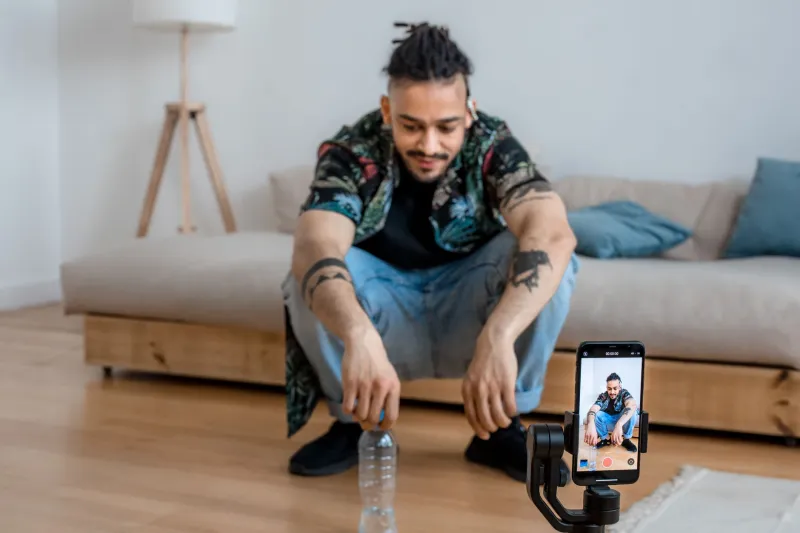
Remember when a celebrity posting a no-makeup selfie was a news event? When a YouTuber filming themselves crying felt like a cultural rupture? When a messy bedroom in the background of a creator's video felt like a window into something honest and unguarded?
That was maybe six years ago. It feels like a different internet.
Somewhere between the rise of "authentic content" as a marketing strategy and the fourth influencer posting their morning mental health routine this week, something broke. The currency of realness got inflated to the point of worthlessness. And now the creator economy is sitting in the rubble of its own transparency, trying to figure out what comes next.
The Authenticity Industrial Complex
Let's be clear about how we got here. Authenticity didn't just happen organically — it was optimized. Brands started paying premiums for "genuine" creators. Algorithms rewarded vulnerability. Audiences, burned by the glossy unreality of early Instagram culture, started gravitating toward people who seemed messy and human and unfiltered.
Creators noticed. Of course they did. And so began the great authenticity arms race: who could be more raw, more honest, more unguarded. Crying videos. Relationship drama disclosed in real time. Mental health spirals live-streamed for engagement. Breakdowns packaged as content, then sponsored by an app.
The problem with competing on authenticity is that the moment you're competing, you've already lost. Authenticity, by definition, can't be strategic. But strategy is the entire engine of the creator economy. You end up with something that looks like realness, performs like realness, and is about as genuine as a theme park version of your hometown.
"There's a whole production process behind my 'unfiltered' content," admitted one mid-tier lifestyle creator in a now-deleted tweet that, ironically, went massively viral. "The lighting is still good. The angle is still chosen. The 'mess' is still curated." The response was a mix of appreciation for the honesty and exhausted recognition: yeah, we kind of knew.
When Behind-the-Scenes Became the Show
The behind-the-scenes content was supposed to be the antidote. Show the audience how the sausage gets made. Pull back the curtain. Let them see the real you, not the produced version.
Except the behind-the-scenes content is also produced now. The "getting ready" video has a shooting schedule. The "candid" kitchen conversation was pitched in a content meeting. The "spontaneous" emotional moment was posted at peak engagement hours with a thumbnail that A/B tested better than the alternative.
Audiences — particularly younger ones — are extraordinarily good at detecting this. Gen Z grew up with media literacy as a survival skill. They can clock a performed vulnerability from three scrolls away. And when they do, the trust doesn't just erode — it inverts. The creator doesn't seem more relatable. They seem more calculated. More hollow.
Digital culture analyst and newsletter writer Bex Morales has been tracking this shift for the past two years. "The overexposure paradox is real," she told Zrozz. "The more a creator shows, the less audiences feel like they're actually seeing anything. At a certain point, intimacy inflation kicks in and nothing feels meaningful anymore."
The Market Is Saturated With Your Feelings
Here's the economics of it: when everyone is offering the same product, the product loses value. In the early creator economy, vulnerability was scarce. One person sharing their anxiety disorder on YouTube felt significant because it was unusual. Now it's table stakes. You almost have to have a mental health journey to be taken seriously as a creator.
This isn't to say those disclosures aren't real or that the people sharing them aren't genuinely struggling. Many are. But the market has absorbed personal pain as content so completely that it's become indistinguishable from performance — not because creators are lying, but because the format itself has been so thoroughly colonized by strategy that sincerity and artifice look identical from the outside.
The result is a kind of audience numbness. Viewers aren't moved by the crying video anymore because they've seen so many crying videos. They're not impressed by the messy apartment because every creator has a messy apartment now. The shock value of realness has been completely depleted.
"I genuinely can't tell when someone is being honest with me versus when they're doing a bit," says 21-year-old content consumer Leah from Portland. "And I think the scariest part is that I don't think the creators can always tell either."
What Comes After Real?
The creator economy is quietly experimenting with answers to this question, and they're all fascinating in different ways.
Some creators are going in the opposite direction entirely — leaning back into production value, into polish, into obvious artifice. If everything fake looks real and everything real looks fake, maybe the play is to just be openly, proudly constructed. A few are finding success with this. The audience knows it's a performance; the creator knows the audience knows; everyone relaxes into the bit.
Others are trying radical scarcity — posting less, sharing less, leaving more to imagination. The mystery is making a quiet comeback. Withholding, it turns out, can be more compelling than disclosing when disclosure has become the default.
And then there are creators who are simply burning out and stepping back, not as a strategy but as a human response to the unsustainable demand of monetizing your own interiority. The machine requires constant emotional output. Not everyone can keep feeding it.
The authenticity recession is real, and it's messy in a way that no content strategy can clean up. The creator economy sold audiences on realness, and now that the bill has come due, nobody quite knows what the next currency is. Whatever it is, it probably won't look like anything we've seen before — which, at this point, might be the only thing that actually works.